Justice for The Falsely Accused
@JuliaBerkowitz1
I guess it didn't go down well with the public that
@Google
is trying to rewrite black history by erasing its biggest pop star. Look at the comments and rate of dislikes! LOL.
https://www.youtube.com/watch?v=Qyiautg ... e=emb_logo
MJJJusticeProject
@MJJJusticePrjct
Search Engine Results Pages (SERP) are pages displayed by search engines in response to a query by a searcher. #MichaelJackson has over a BILLION search results. So HOW, pray tell, could
@Google
leave him OFF of Most searched African American for #BlackHistoryMonth in Feb 2020?
Trying to re write black history???
-
soulmum

- Utente certificato

- Messaggi: 9304
- Iscritto il: 31 maggio 2016, 12:43
-
soulmum
- Utente certificato
- Messaggi: 9304
- Iscritto il: 31 maggio 2016, 12:43
Re: Google trying to re write black history???
Taj Jackson
@tajjackson3
Let’s trend #MichaelJacksonBlackHistory this Saturday, Feb 1 in honor of Black History month. Post an image or video of Michael Jackson’s many accomplishments for Black History. Let’s remind them how MJ was a Black history maker who ”helped shape and influence American culture”.
Proof #MichaelJacksonBlackHistory
-
soulmum
- Utente certificato
- Messaggi: 9304
- Iscritto il: 31 maggio 2016, 12:43
Re: Google trying to re write black history???
This, to me, is very relevant in the current climate and deserves to be heard loud and clear.
https://www.latimes.com/entertainment-a ... emy-speech
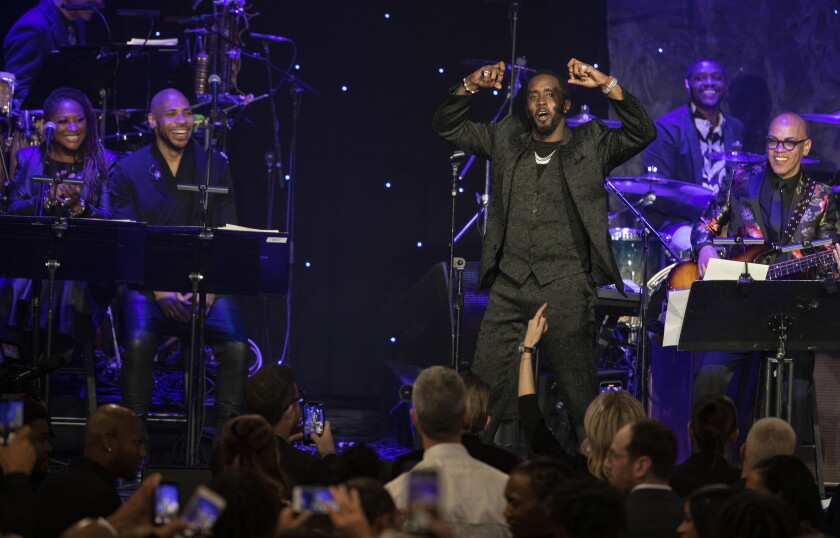
Sean ‘Diddy’ Combs: ‘Hip-hop has never been respected by the Grammys’
By MIKAEL WOODPOP MUSIC CRITIC
JAN. 26, 2020 2:42 AM
Sean “Diddy” Combs was the guest of honor at Clive Davis’ annual pre-Grammy gala Saturday night at the Beverly Hilton, where the veteran hip-hop producer and record executive received the Recording Academy’s Industry Icon award.
After a tribute performance by several acts he helped make famous — including Faith Evans, Mase, Carl Thomas and Lil’ Kim — Combs gave an approximately hour-long acceptance speech that climaxed with an emotional appeal to the academy, which has been thrown into turmoil ahead of Sunday’s Grammys ceremony following the shocking ouster of chief executive Deborah Dugan.
Here’s what Combs said:
“Because we’re all family, I have to be honest. The last few days I’ve been conflicted. I’m being honored by the industry I love, the family that I love.
“But it’s an elephant in the room, and it’s not just about the Grammys. This is discrimination and injustice everywhere at an all-time high. But there’s something I need to say to the Grammys … ’cause you really need to know this.
“Every year, y’all be killing us, man. Man, I’m talking about the pain. I’m speaking for all the artists here, the executives. The amount of time it takes to make these records, to pour your heart out into it, and you just want an even playing field. In the great words of Erykah Badu, we’re artists and we’re sensitive about our sh—. We are passionate. For most of us, this is all we got. This is our only hope.
“Truth be told, hip-hop has never been respected by the Grammys. Black music has never been respected by the Grammys to the point that it should be. So right now, this current situation, it’s not a revelation. This thing been going on.
“And it’s not just going on in music. It’s going on in film, it’s going on in sports, it’s going on around the world. And for years we’ve allowed institutions that have never had our best interests at heart to judge us. And that stops right now.
“I’m officially starting the clock. Y’all got 365 days to get this sh— together.
“We need the artists to take back control. We need transparency. We need diversity. This is the room that has the power to make the change that needs to be made.
“They have to make the changes for us. They’re a nonprofit organization that is supposed to protect the welfare of the musical community. That’s what it says on the mission statement. That’s the truth. They work for us.
“We have the power. We decide what’s hot. If we don’t go, nobody goes. If we don’t support, nobody supports. We control what’s cool. We control what’s hot. We control what your kids listen to, what they dance to.
“We control what’s in video games . We control how they wear their pants saggy. We control everything.
“Now, we ain’t gonna solve this tonight. But it’s gonna take all of us to get this done. It’s gonna take the artists and the executives to recognize their power.
“And I’m standing here today not to just bash y’all, because as I say, y’all a nonprofit organization. We just need to get it right. I’m here for the artists.
“So sign me up. I’m here to help make a difference and help us have a positive outcome. I believe all my brothers and sisters out there would be willing to work on getting this right.
“Because we just want it right. We just want to be able to go to the Grammys… You got to understand, we seen Quincy Jones and Michael Jackson — Michael Jackson’s holding eight Grammys. He was dropping Grammys!
“But you know why he was dropping them Grammys? Why he got eight Grammys? Because they never nominated him for ‘Off the Wall.’ And so ‘Thriller’ was his revenge. It wasn’t his honest work — it was his revenge. He’s like, ‘They wanna f— with me, I’m gonna take your souls.’ And then we had ‘Thriller.’
“My goal used to be about making hit records. Now it’s about insuring that the culture moves forward. My culture. Our culture. The black culture.
“And for me to be worthy of receiving an Icon award, I have to use my experience to help make change.
“And on that note, I’m finishing up. Y’all got 365 days. And I wanna dedicate this award to Michael Jackson for ‘Off the Wall,’ Prince for ‘1999,’ Beyoncé for ‘Lemonade,’ Missy Elliott for ‘Da Real World,’ Snoop Dogg for ‘Doggystyle,’ Kanye West for ‘Graduation’ and Nas for ‘Illmatic.’ I love y’all.”
https://www.latimes.com/entertainment-a ... emy-speech
Sean ‘Diddy’ Combs: ‘Hip-hop has never been respected by the Grammys’
By MIKAEL WOODPOP MUSIC CRITIC
JAN. 26, 2020 2:42 AM
Sean “Diddy” Combs was the guest of honor at Clive Davis’ annual pre-Grammy gala Saturday night at the Beverly Hilton, where the veteran hip-hop producer and record executive received the Recording Academy’s Industry Icon award.
After a tribute performance by several acts he helped make famous — including Faith Evans, Mase, Carl Thomas and Lil’ Kim — Combs gave an approximately hour-long acceptance speech that climaxed with an emotional appeal to the academy, which has been thrown into turmoil ahead of Sunday’s Grammys ceremony following the shocking ouster of chief executive Deborah Dugan.
Here’s what Combs said:
“Because we’re all family, I have to be honest. The last few days I’ve been conflicted. I’m being honored by the industry I love, the family that I love.
“But it’s an elephant in the room, and it’s not just about the Grammys. This is discrimination and injustice everywhere at an all-time high. But there’s something I need to say to the Grammys … ’cause you really need to know this.
“Every year, y’all be killing us, man. Man, I’m talking about the pain. I’m speaking for all the artists here, the executives. The amount of time it takes to make these records, to pour your heart out into it, and you just want an even playing field. In the great words of Erykah Badu, we’re artists and we’re sensitive about our sh—. We are passionate. For most of us, this is all we got. This is our only hope.
“Truth be told, hip-hop has never been respected by the Grammys. Black music has never been respected by the Grammys to the point that it should be. So right now, this current situation, it’s not a revelation. This thing been going on.
“And it’s not just going on in music. It’s going on in film, it’s going on in sports, it’s going on around the world. And for years we’ve allowed institutions that have never had our best interests at heart to judge us. And that stops right now.
“I’m officially starting the clock. Y’all got 365 days to get this sh— together.
“We need the artists to take back control. We need transparency. We need diversity. This is the room that has the power to make the change that needs to be made.
“They have to make the changes for us. They’re a nonprofit organization that is supposed to protect the welfare of the musical community. That’s what it says on the mission statement. That’s the truth. They work for us.
“We have the power. We decide what’s hot. If we don’t go, nobody goes. If we don’t support, nobody supports. We control what’s cool. We control what’s hot. We control what your kids listen to, what they dance to.
“We control what’s in video games . We control how they wear their pants saggy. We control everything.
“Now, we ain’t gonna solve this tonight. But it’s gonna take all of us to get this done. It’s gonna take the artists and the executives to recognize their power.
“And I’m standing here today not to just bash y’all, because as I say, y’all a nonprofit organization. We just need to get it right. I’m here for the artists.
“So sign me up. I’m here to help make a difference and help us have a positive outcome. I believe all my brothers and sisters out there would be willing to work on getting this right.
“Because we just want it right. We just want to be able to go to the Grammys… You got to understand, we seen Quincy Jones and Michael Jackson — Michael Jackson’s holding eight Grammys. He was dropping Grammys!
“But you know why he was dropping them Grammys? Why he got eight Grammys? Because they never nominated him for ‘Off the Wall.’ And so ‘Thriller’ was his revenge. It wasn’t his honest work — it was his revenge. He’s like, ‘They wanna f— with me, I’m gonna take your souls.’ And then we had ‘Thriller.’
“My goal used to be about making hit records. Now it’s about insuring that the culture moves forward. My culture. Our culture. The black culture.
“And for me to be worthy of receiving an Icon award, I have to use my experience to help make change.
“And on that note, I’m finishing up. Y’all got 365 days. And I wanna dedicate this award to Michael Jackson for ‘Off the Wall,’ Prince for ‘1999,’ Beyoncé for ‘Lemonade,’ Missy Elliott for ‘Da Real World,’ Snoop Dogg for ‘Doggystyle,’ Kanye West for ‘Graduation’ and Nas for ‘Illmatic.’ I love y’all.”
-
soulmum
- Utente certificato
- Messaggi: 9304
- Iscritto il: 31 maggio 2016, 12:43
Re: Google trying to re write black history???
@JuliaBerkowitz1
Replying to
@JuliaBerkowitz1
How can you leave MJ out of a "Most Searched" celebrities video? Your very own Google Trends, exposes you
@Google

MJJJusticeProject
@MJJJusticePrjct
Replying to
@MJJJusticePrjct
and
@Google
40+Million search results on #MichaelJackson Super Bowl performance ... This is your data Google-

Replying to
@JuliaBerkowitz1
How can you leave MJ out of a "Most Searched" celebrities video? Your very own Google Trends, exposes you
MJJJusticeProject
@MJJJusticePrjct
Replying to
@MJJJusticePrjct
and
40+Million search results on #MichaelJackson Super Bowl performance ... This is your data Google-
-
soulmum
- Utente certificato
- Messaggi: 9304
- Iscritto il: 31 maggio 2016, 12:43
Re: Google trying to re write black history???
Are google backtracking now? Maybe they have realised the fans are on the case for fairness.
N@t
@MasQrelatos
I just googled top entertainers of all time and #MJ came up first

N@t
@MasQrelatos
I just googled top entertainers of all time and #MJ came up first
-
soulmum
- Utente certificato
- Messaggi: 9304
- Iscritto il: 31 maggio 2016, 12:43
Re: Google trying to re write black history???
Naya Song
@NayaSong
Since Google is deleting MJ from history, maybe we should bookmark this, just in case:
with the image search "most beautiful smile in the world"
MJ is the overwhelming winner!
I know it won't replace that unforgivable failing but...
#MJFam #MichaelJacksonBlackHistory

@NayaSong
Since Google is deleting MJ from history, maybe we should bookmark this, just in case:
with the image search "most beautiful smile in the world"
MJ is the overwhelming winner!
I know it won't replace that unforgivable failing but...
#MJFam #MichaelJacksonBlackHistory
-
soulmum
- Utente certificato
- Messaggi: 9304
- Iscritto il: 31 maggio 2016, 12:43
Re: Google trying to re write black history???
The fans are fighting back in true 'army of love' style.
You cannot write Michael out of black history full stop!!!
andjustice4some
@andjustice4some
Brazil! Wait, does that say 13.8 million tweets?

Taj Jackson
@tajjackson3
Thank you to everyone who tweeted today.
#MichaelJacksonBlackHistory
We trended all over the world.
You cannot write Michael out of black history full stop!!!
andjustice4some
@andjustice4some
Brazil! Wait, does that say 13.8 million tweets?
Taj Jackson
@tajjackson3
Thank you to everyone who tweeted today.
#MichaelJacksonBlackHistory
We trended all over the world.
-
soulmum
- Utente certificato
- Messaggi: 9304
- Iscritto il: 31 maggio 2016, 12:43
Re: Trying to re write black history???
Tasha-with-a-Tea
@Tashawithatea
The media wants you to believe that Michael Jackson was ashamed to be black, bleached his skin & abused kids
Why?
Because when he spoke, the world listened.
He was a powerful & proud black man and his legacy should be protected


TSCM
@MJJRepository
"...to African-American people MJ is black. He is black. If you ask MJ what his race is, it’s black. But to a lot of white people, MJ transcends race. He brings people together. MJ...loves people on all continents, people of all races." -Tom Mesereau
Taj Jackson
@tajjackson3
Like so many things he did, it changed television. The Super Bowl Halftime show was never the same again. For the first time, more people tuned in for Michael Jackson’s Super Bowl Halftime performance than watched the actual game.
The internet crashed when it was announced that #MichaelJackson died - NO other person has broken multiple search engines.. #MichaelJacksonBlackHistory


@Tashawithatea
The media wants you to believe that Michael Jackson was ashamed to be black, bleached his skin & abused kids
Why?
Because when he spoke, the world listened.
He was a powerful & proud black man and his legacy should be protected
TSCM
@MJJRepository
"...to African-American people MJ is black. He is black. If you ask MJ what his race is, it’s black. But to a lot of white people, MJ transcends race. He brings people together. MJ...loves people on all continents, people of all races." -Tom Mesereau
Taj Jackson
@tajjackson3
Like so many things he did, it changed television. The Super Bowl Halftime show was never the same again. For the first time, more people tuned in for Michael Jackson’s Super Bowl Halftime performance than watched the actual game.
The internet crashed when it was announced that #MichaelJackson died - NO other person has broken multiple search engines.. #MichaelJacksonBlackHistory
-
soulmum
- Utente certificato
- Messaggi: 9304
- Iscritto il: 31 maggio 2016, 12:43
-
soulmum
- Utente certificato
- Messaggi: 9304
- Iscritto il: 31 maggio 2016, 12:43
Re: Trying to re write black history???
TSCM
@MJJRepository
Very pleased to see #MichaelJacksonBlackHistory trending and prominently displayed in USA amidst the celebrations and Black History Month hashtags today.
Michael was a pioneer & philanthropist who fearlessly confronted the many injustices and inequalities of this past century.

@MJJRepository
Very pleased to see #MichaelJacksonBlackHistory trending and prominently displayed in USA amidst the celebrations and Black History Month hashtags today.
Michael was a pioneer & philanthropist who fearlessly confronted the many injustices and inequalities of this past century.
-
soulmum
- Utente certificato
- Messaggi: 9304
- Iscritto il: 31 maggio 2016, 12:43
Re: Trying to re write black history???
Marisa Ramírez
@MarisaRblues
In 1992, Michael Jackson traveled to Africa and would be able to visit orphanages, children’s hospitals, churches, schools and playgrounds. He spent time in Gabon, Egypt, Tanzania and Cote d'Ivoire where he was crowned a king. #MichaelJacksonBlackHistory

@MarisaRblues
In 1992, Michael Jackson traveled to Africa and would be able to visit orphanages, children’s hospitals, churches, schools and playgrounds. He spent time in Gabon, Egypt, Tanzania and Cote d'Ivoire where he was crowned a king. #MichaelJacksonBlackHistory
-
soulmum
- Utente certificato
- Messaggi: 9304
- Iscritto il: 31 maggio 2016, 12:43

-
soulmum
- Utente certificato
- Messaggi: 9304
- Iscritto il: 31 maggio 2016, 12:43
-
soulmum
- Utente certificato
- Messaggi: 9304
- Iscritto il: 31 maggio 2016, 12:43
Re: Trying to re write black history???
FrancesMarie Mclaughlin
@FrancesMarieMc1
Please someone tell me how John Legend got onto The Black History list an MJ Didn't, I smell something rotten, Do you??
It ant Black History without MJ.
Sorry but it's how I feel.
@FrancesMarieMc1
Please someone tell me how John Legend got onto The Black History list an MJ Didn't, I smell something rotten, Do you??
It ant Black History without MJ.
Sorry but it's how I feel.
-
soulmum
- Utente certificato
- Messaggi: 9304
- Iscritto il: 31 maggio 2016, 12:43
Re: Trying to re write black history???
MJJJusticeProject
@MJJJusticePrjct
#MichaelJacksonSuperBowl made #BlackHistory .. A Black Artist CHANGED the #SuperBowl Half-time from low rating interval to MOST Watched TV- more watched than the game itself. HE DID THAT. Appreciaet the enormity of his achievements & influence
@MJJJusticePrjct
#MichaelJacksonSuperBowl made #BlackHistory .. A Black Artist CHANGED the #SuperBowl Half-time from low rating interval to MOST Watched TV- more watched than the game itself. HE DID THAT. Appreciaet the enormity of his achievements & influence
-
soulmum
- Utente certificato
- Messaggi: 9304
- Iscritto il: 31 maggio 2016, 12:43
-
soulmum
- Utente certificato
- Messaggi: 9304
- Iscritto il: 31 maggio 2016, 12:43
Re: Trying to re write black history???
https://www.1063thegroove.com/rb-news/b ... -crumpler/
Black History Month Spotlight: Michael Jackson & Dr. Rebecca Lee Crumpler!

Posted on February 3, 2020 by Pulse of Radio
Black History Month 2020
To recall and celebrate the positive contributions to our nation made by people of African descent, American historian Carter G. Woodson established Black History Week beginning on Feb. 12, 1926. In 1976, as part of the nation's bicentennial, the week was expanded into Black History Month.
TODAY'S SPOTLIGHT ON MICHAEL JACKSON
Michael Jackson was one of the top-selling artists of all time, only behind Elvis Presley and The Beatles, selling nearly 175 million albums worldwide. His 1982 album Thriller is the best-selling album of all time, with over 50 million copies sold worldwide. Dubbed the “King of Pop”, MJ was a singer, songwriter, producer, dancer, actor and humanitarian. He launched his solo career in 1971, after making his debut with his brothers The Jackson 5 in 1964. He is one of the only artists to be inducted into the Rock and Roll Hall of Fame twice. He was also inducted into the Songwriters Hall of Fame and the Dance Hall of Fame as the first and only dancer from pop and rock music. His other achievements include multiple Guinness World Records; 13 Grammy Awards as well as the Grammy Legend Award and the Grammy Lifetime Achievement Award; 26 American Music Awards, more than any other artist, including the “Artist of the Century” and “Artist of the 1980s”; 13 number-one singles in the United States in his solo career, more than any other male artist in the Hot 100 era.
He is also the most awarded recording artists in the history of pop music. He is also the first artist to have a top ten single on the Billboard Hot 100 in five different decades after “Love Never Felt So Good” reached number 9 in 2014. He earned nearly $1 billion during his career and became one of the top earning dead celebrities after his death in 2009.
TRIVIA
Shared with Carlos Santana the record for most Grammys won in one year, with eight. First solo artist to generate four top ten hits on the Billboard charts on one album with “Off the Wall.” First artist to generate seven top ten hits (USA) on one album with “Thriller.” Until August 2011, he was the only artist in history to generate five #1 hits (USA) from one album with “Bad”. Katy Perry has since tied this record with her album “Teenage Dream”. With Lionel Richie, co-wrote the song “We Are the World,” and was one of its performers. Wrote and recorded a song called “On the Line”, produced by Kenneth 'Babyface' Edmonds, for the film Get on the Bus (1996) that was not included on the soundtrack for the film. Inducted into the Rock and Roll Hall of Fame in 2001 (as a solo artist). Inducted into the Rock and Roll Hall of Fame in 1997 (as a member of the Jackson 5). Had three kids: Prince Michael, Prince Michael II, Paris Jackson. Was found not guilty on ten counts of child molestation on 13 June 2005 due to lack of evidence. Ranked #11 in VH1's list of the “100 Greatest Kid Stars” with his brothers as the Jackson 5. His hit song “Bad” from 1987 was initially supposed to be a duet with Prince. Prince said in an interview that he did not wish to sing the line “Your butt is mine”. He was the Godfather of Nicole Richie. The music video for his song “Thriller” was the longest video ever with 13 minutes, until this record was broken by Mike Skinner with the video for the song “When You Wasn't Famous”. Claimed to have given $300 million to charity, more than any other celebrity apart from Oprah Winfrey. Owed an estimated $435 million in debts at the time of his death. His memorial service from the Staples Center on Tuesday, July 7th 2009 brought the Internet's second largest day ever in terms of total traffic. He died on the same day as Farrah Fawcett. Both were in California at the time. She died at 9:28 a.m PDT, he was pronounced dead at 2:26 p.m. after hours of unsuccessful resuscitation. Holds 10 different Guinness World Records. MJ died at age 50 on June 25, 2009.
PERSONAL QUOTES
On being black: “I'm a black American, I am proud of my race. I am proud of who I am. I have a lot of pride and dignity.” On a better tomorrow: “Let us dream of tomorrow where we can truly love from the soul, and know love as the ultimate truth at the heart of all creation.” On hating his appearance: “Yes, and I had pimples so badly it used to make me so shy. I used not to look at myself. I'd hide my face in the dark, I wouldn't want to look in the mirror and my father teased me and I just hated it and I cried everyday.” On being a perfectionist: “I'm never pleased with anything, I'm a perfectionist, it's part of who I am.”
(Source: RIAA, Forbes, Wikipedia, Imdb, Brainy Quotes)
On child abuse allegations:
“If I would hurt a child, I would slit my wrists. I would never hurt a child. It's totally false. I was outraged. I could never do something like that.”
On his influences:
“Berry Gordy, Berry Gordy, Berry Gordy, Berry Gordy. I just have to say thank you. He was so important in our lives, and he is really my real inspiration, and I owe him so much. Quincy Jones, thank you. We talk about a 'Thriller,' it's Quincy. You're incredible. I love you, Quincy. He is the man. The glamorous–(crowd members shouts something) No, I…thank you. The glamorous and talented and beautiful Diana Ross, who is my second mother–I thank you.”
On being beaten as a child:
“Michael Jackson tells Oprah he was beaten as a child. “(Michael) I remember going to the recording studio, there was a park across the street and I would see all the children playing and they were rooting and making noise and I would cry. It would make me sad that I would have to go and work instead. Oh there's a lot of sadness in my past life. And you know adolescence and my father and all those things, it just made me very sad. (Oprah) So he would tease you and make fun of you? (Michael) Yes. (Oprah) Did he ever beat you? (Michael) Yes he did.”
On Neverland Ranch:
“I wanted to have a place that I could create everything that I that I never had as a child. So, you see rides. You see animals. There's a movie theater. I was always on tour, traveling. You know? And — I never got a chance to do those things. So, I compensated for the loss by — I have a good time — I mean, I can't go into a park. I can't go to Disneyland, as myself. I can't go out and walk down the street. There's crowds, and bumper-to-bumper cars. So, I create my world behind my gates. Everything that I love is behind those gates.”
Janet Jackson speaks on behalf of her family after MJ's death at the 2009 BET Awards.
“I'm going to keep it very short but I, I just like to say that to you Michael is an icon… to us Michael is family and he will forever live in all of our hearts. On behalf of my family and myself thank you for all of your love, thank you for all your support. We miss him so much.”
BLACK HISTORY MONTH QUESTION OF THE DAY:
Who is the first golfer to ever hold all four professional major championships at the same time?
Answer: Tiger Woods
TODAY IN BLACK HISTORY:
In 1870, the Fifteenth Amendment, fiving blacks the right to vote, was ratified. In 1874, Blanche Kelso Bruce (Mississippi) was elected to a full six year term in the U.S. Senate. In 1903, Jack Johnson became the first Negro heavyweight champion. In 1920, The Negro Baseball League founded. In 1956, Autherine J. Lucy became the first black student to attend the University Of Alabama. She was expelled three days later “for her own safety” in response to threats from a mob. In 1992, Autherine Lucy Foster graduated from the University with a master's degree in education. The same day, her daughter,Grazia Foster, graduated with a bachelor's degree in corporate finance. In 1964, School officials reported that 464,000 black and Puerto Rican students boycotted New York City public schools. More than 267,000 were absent during second boycott on March 16th. In 1965, Geraldine McCullough, sculptor, won the Widener Gold Medal award. In 1968, Motown made history in England when The Supremes – Greatest Hits became the first album by a black group to reach Number One on the British sales chart. In 1981, The Air Force Academy discontinued its ban on considering the applications of persons with the sickle cell trait. Many people felt the ban had stigmatized blacks. In 1988, In Montgomery, Alabama, Thomas Reed, president of the Alabama chapter of the NAACP, was arrested after he and 11 others attempted to strike a Confederate flag flying atop the state capitol building. In 1989, Former St. Louis Cardinals first baseman Bill White was named president of the National League. He was the first African-American to head a major sports league.
BLACK HISTORY MONTH SPOTLIGHT: DR. REBECCA LEE CRUMPLER
Dr. Rebecca Lee Crumpler was the first African-American woman physician in the United States. Dr. Crumpler was born in 1831 in Delaware and worked as a nurse in Massachusettes between 1852 and 1860. She was accepted to New England Female Medical College and earned an M.D. in 1864. She practiced medicine in Boston, Richmond, Virginia, primarily working with poor people who had limited access to medical care.
In 1883, Dr. Crumpler published a renowned book, Book of Medical Discourses In Two Parts — which many believe is the first medical text written by an African-American author. Dr. Crumpler died in 1895 in Massachusettes.
Source: (PBS, Time)
Black History Month Spotlight: Michael Jackson & Dr. Rebecca Lee Crumpler!
Posted on February 3, 2020 by Pulse of Radio
Black History Month 2020
To recall and celebrate the positive contributions to our nation made by people of African descent, American historian Carter G. Woodson established Black History Week beginning on Feb. 12, 1926. In 1976, as part of the nation's bicentennial, the week was expanded into Black History Month.
TODAY'S SPOTLIGHT ON MICHAEL JACKSON
Michael Jackson was one of the top-selling artists of all time, only behind Elvis Presley and The Beatles, selling nearly 175 million albums worldwide. His 1982 album Thriller is the best-selling album of all time, with over 50 million copies sold worldwide. Dubbed the “King of Pop”, MJ was a singer, songwriter, producer, dancer, actor and humanitarian. He launched his solo career in 1971, after making his debut with his brothers The Jackson 5 in 1964. He is one of the only artists to be inducted into the Rock and Roll Hall of Fame twice. He was also inducted into the Songwriters Hall of Fame and the Dance Hall of Fame as the first and only dancer from pop and rock music. His other achievements include multiple Guinness World Records; 13 Grammy Awards as well as the Grammy Legend Award and the Grammy Lifetime Achievement Award; 26 American Music Awards, more than any other artist, including the “Artist of the Century” and “Artist of the 1980s”; 13 number-one singles in the United States in his solo career, more than any other male artist in the Hot 100 era.
He is also the most awarded recording artists in the history of pop music. He is also the first artist to have a top ten single on the Billboard Hot 100 in five different decades after “Love Never Felt So Good” reached number 9 in 2014. He earned nearly $1 billion during his career and became one of the top earning dead celebrities after his death in 2009.
TRIVIA
Shared with Carlos Santana the record for most Grammys won in one year, with eight. First solo artist to generate four top ten hits on the Billboard charts on one album with “Off the Wall.” First artist to generate seven top ten hits (USA) on one album with “Thriller.” Until August 2011, he was the only artist in history to generate five #1 hits (USA) from one album with “Bad”. Katy Perry has since tied this record with her album “Teenage Dream”. With Lionel Richie, co-wrote the song “We Are the World,” and was one of its performers. Wrote and recorded a song called “On the Line”, produced by Kenneth 'Babyface' Edmonds, for the film Get on the Bus (1996) that was not included on the soundtrack for the film. Inducted into the Rock and Roll Hall of Fame in 2001 (as a solo artist). Inducted into the Rock and Roll Hall of Fame in 1997 (as a member of the Jackson 5). Had three kids: Prince Michael, Prince Michael II, Paris Jackson. Was found not guilty on ten counts of child molestation on 13 June 2005 due to lack of evidence. Ranked #11 in VH1's list of the “100 Greatest Kid Stars” with his brothers as the Jackson 5. His hit song “Bad” from 1987 was initially supposed to be a duet with Prince. Prince said in an interview that he did not wish to sing the line “Your butt is mine”. He was the Godfather of Nicole Richie. The music video for his song “Thriller” was the longest video ever with 13 minutes, until this record was broken by Mike Skinner with the video for the song “When You Wasn't Famous”. Claimed to have given $300 million to charity, more than any other celebrity apart from Oprah Winfrey. Owed an estimated $435 million in debts at the time of his death. His memorial service from the Staples Center on Tuesday, July 7th 2009 brought the Internet's second largest day ever in terms of total traffic. He died on the same day as Farrah Fawcett. Both were in California at the time. She died at 9:28 a.m PDT, he was pronounced dead at 2:26 p.m. after hours of unsuccessful resuscitation. Holds 10 different Guinness World Records. MJ died at age 50 on June 25, 2009.
PERSONAL QUOTES
On being black: “I'm a black American, I am proud of my race. I am proud of who I am. I have a lot of pride and dignity.” On a better tomorrow: “Let us dream of tomorrow where we can truly love from the soul, and know love as the ultimate truth at the heart of all creation.” On hating his appearance: “Yes, and I had pimples so badly it used to make me so shy. I used not to look at myself. I'd hide my face in the dark, I wouldn't want to look in the mirror and my father teased me and I just hated it and I cried everyday.” On being a perfectionist: “I'm never pleased with anything, I'm a perfectionist, it's part of who I am.”
(Source: RIAA, Forbes, Wikipedia, Imdb, Brainy Quotes)
On child abuse allegations:
“If I would hurt a child, I would slit my wrists. I would never hurt a child. It's totally false. I was outraged. I could never do something like that.”
On his influences:
“Berry Gordy, Berry Gordy, Berry Gordy, Berry Gordy. I just have to say thank you. He was so important in our lives, and he is really my real inspiration, and I owe him so much. Quincy Jones, thank you. We talk about a 'Thriller,' it's Quincy. You're incredible. I love you, Quincy. He is the man. The glamorous–(crowd members shouts something) No, I…thank you. The glamorous and talented and beautiful Diana Ross, who is my second mother–I thank you.”
On being beaten as a child:
“Michael Jackson tells Oprah he was beaten as a child. “(Michael) I remember going to the recording studio, there was a park across the street and I would see all the children playing and they were rooting and making noise and I would cry. It would make me sad that I would have to go and work instead. Oh there's a lot of sadness in my past life. And you know adolescence and my father and all those things, it just made me very sad. (Oprah) So he would tease you and make fun of you? (Michael) Yes. (Oprah) Did he ever beat you? (Michael) Yes he did.”
On Neverland Ranch:
“I wanted to have a place that I could create everything that I that I never had as a child. So, you see rides. You see animals. There's a movie theater. I was always on tour, traveling. You know? And — I never got a chance to do those things. So, I compensated for the loss by — I have a good time — I mean, I can't go into a park. I can't go to Disneyland, as myself. I can't go out and walk down the street. There's crowds, and bumper-to-bumper cars. So, I create my world behind my gates. Everything that I love is behind those gates.”
Janet Jackson speaks on behalf of her family after MJ's death at the 2009 BET Awards.
“I'm going to keep it very short but I, I just like to say that to you Michael is an icon… to us Michael is family and he will forever live in all of our hearts. On behalf of my family and myself thank you for all of your love, thank you for all your support. We miss him so much.”
BLACK HISTORY MONTH QUESTION OF THE DAY:
Who is the first golfer to ever hold all four professional major championships at the same time?
Answer: Tiger Woods
TODAY IN BLACK HISTORY:
In 1870, the Fifteenth Amendment, fiving blacks the right to vote, was ratified. In 1874, Blanche Kelso Bruce (Mississippi) was elected to a full six year term in the U.S. Senate. In 1903, Jack Johnson became the first Negro heavyweight champion. In 1920, The Negro Baseball League founded. In 1956, Autherine J. Lucy became the first black student to attend the University Of Alabama. She was expelled three days later “for her own safety” in response to threats from a mob. In 1992, Autherine Lucy Foster graduated from the University with a master's degree in education. The same day, her daughter,Grazia Foster, graduated with a bachelor's degree in corporate finance. In 1964, School officials reported that 464,000 black and Puerto Rican students boycotted New York City public schools. More than 267,000 were absent during second boycott on March 16th. In 1965, Geraldine McCullough, sculptor, won the Widener Gold Medal award. In 1968, Motown made history in England when The Supremes – Greatest Hits became the first album by a black group to reach Number One on the British sales chart. In 1981, The Air Force Academy discontinued its ban on considering the applications of persons with the sickle cell trait. Many people felt the ban had stigmatized blacks. In 1988, In Montgomery, Alabama, Thomas Reed, president of the Alabama chapter of the NAACP, was arrested after he and 11 others attempted to strike a Confederate flag flying atop the state capitol building. In 1989, Former St. Louis Cardinals first baseman Bill White was named president of the National League. He was the first African-American to head a major sports league.
BLACK HISTORY MONTH SPOTLIGHT: DR. REBECCA LEE CRUMPLER
Dr. Rebecca Lee Crumpler was the first African-American woman physician in the United States. Dr. Crumpler was born in 1831 in Delaware and worked as a nurse in Massachusettes between 1852 and 1860. She was accepted to New England Female Medical College and earned an M.D. in 1864. She practiced medicine in Boston, Richmond, Virginia, primarily working with poor people who had limited access to medical care.
In 1883, Dr. Crumpler published a renowned book, Book of Medical Discourses In Two Parts — which many believe is the first medical text written by an African-American author. Dr. Crumpler died in 1895 in Massachusettes.
Source: (PBS, Time)
-
soulmum
- Utente certificato
- Messaggi: 9304
- Iscritto il: 31 maggio 2016, 12:43
Re: Trying to re write black history???
https://www.theguardian.com/music/2018/ ... are_btn_tw
Black and White: how Dangerous kicked off Michael Jackson's race paradox
As the King of Pop’s skin got lighter his music became more politicised, and 1991’s overlooked album encapsulated this radical moment in music
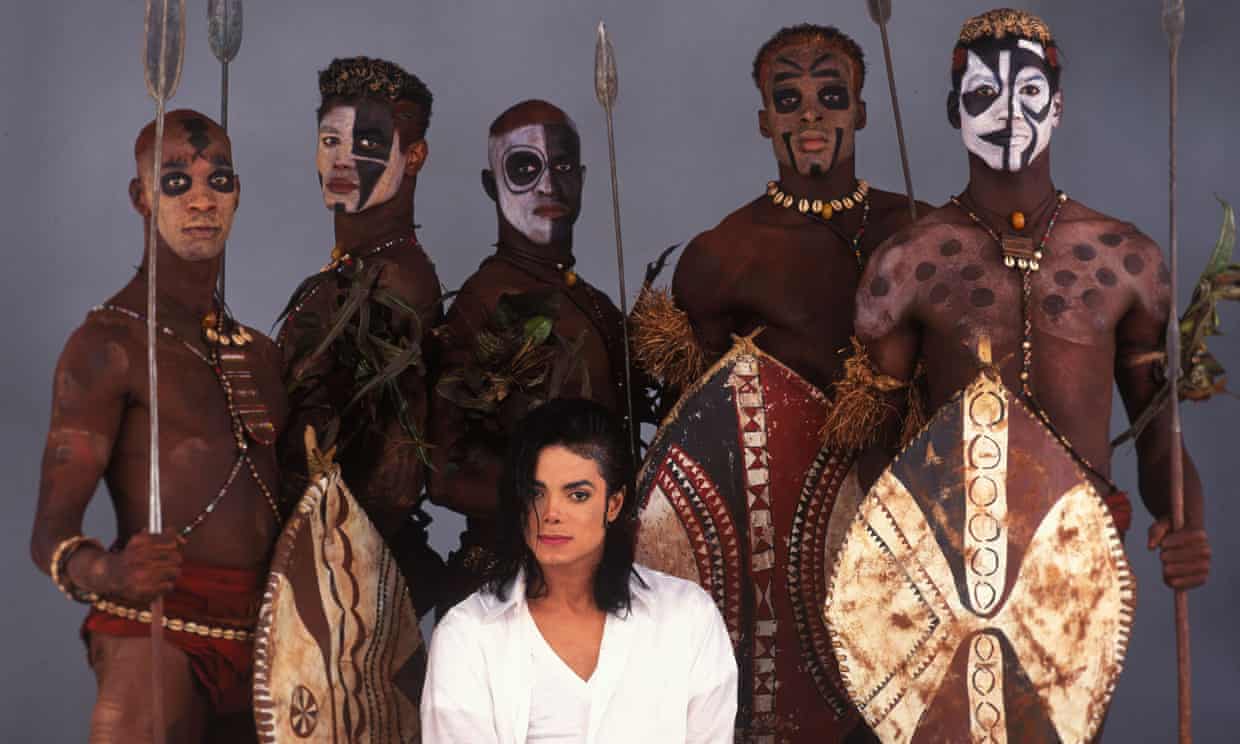
For a figure as enigmatic as Michael Jackson, one of the more fascinating paradoxes about his career is this: as he became whiter, he became blacker. Or to put it another way: as his skin became whiter, his work became blacker.
To elaborate, we must rewind to a crucial turning point: the early 1990s. In hindsight, it represents the best of times and the worst of times for the artist. In November 1991, Jackson released the first single from his Dangerous album: Black or White, a bright, catchy pop-rock-rap fusion that soared to No 1 on the Billboard Hot 100 and remained at the top of the charts for six weeks. It was his most successful solo single since Beat It.
The conversation surrounding Jackson at this point, however, was not about his music. It was about his race. Sure, critics said, he might sing that it “don’t matter if you’re black or white”, but then why had he turned himself white? Was he bleaching his skin? Was he ashamed of his blackness? Was he trying to appeal to every demographic, transcend every identity category in a vainglorious effort to reach greater commercial heights than Thriller?
To this day, many assume Jackson bleached his skin to become white – that it was a wilful cosmetic decision because he was ashamed of his race. Yet in the mid-1980s Jackson was diagnosed with vitiligo, a skin disorder that causes loss of pigmentation in patches on the body. According to those close to him, it was an excruciatingly humiliating personal challenge, one in which he went to great lengths to hide through long-sleeve shirts, hats, gloves, sunglasses and masks. When Jackson died in 2009, his autopsy definitively confirmed he had vitiligo, as did his medical history.
However, in the early 1990s, the public were sceptical to say the least. Jackson first publicly revealed he had vitiligo in a widely watched 1993 interview with Oprah Winfrey. “This is the situation,” he explained. “I have a skin disorder that destroys the pigmentation of the skin. It is something I cannot help, OK? But when people make up stories that I don’t want to be what I am it hurts me … It’s a problem for me that I can’t control.” Jackson did acknowledge having plastic surgery but said he was “horrified” that people concluded that he didn’t want to be black. “I am a black American,” he declared. “I am proud of my race. I am proud of who I am.”
For Jackson, then, there was no ambivalence about his racial identity and heritage. His skin had changed but his race had not. In fact, if anything his identification as a black artist had grown stronger. The first indication of this came in the video for Black or White. Watched by an unprecedented global audience of 500 million viewers, it was Jackson’s biggest platform ever; a platform, it should be noted, that he earned by breaking down racial barriers at MTV with his groundbreaking short films from Thriller.
The first few minutes of the Black or White video seemed relatively benign and consistent with the utopian calls of previous songs (Can You Feel It, We Are the World, Man in the Mirror). Jackson, adorned in contrasting black-and-white apparel, travels across the globe, fluidly adapting his dance moves to whatever culture or country he finds himself in. He acts as a kind of cosmopolitan shaman, performing alongside Africans, Native Americans, Thais, Indians and Russians, attempting, it seems, to instruct the recliner-bound White American Father (played by George Wendt) about the beauties of difference and diversity. The main portion of the video culminates with the groundbreaking “morphing sequence,” in which ebullient faces of various races seamlessly blend from one to another. The message seemed to be that we are all part of the human family – distinct but connected – regardless of cosmetic variations.
In the age of Trump and the resurgence of white nationalism, even that multicultural message remains vital. But that’s not all Jackson had to say. Just when the director (John Landis) yells “Cut!” we see a black panther lurking off the soundstage to a back alley. The coda that follows became Jackson’s riskiest artistic move to this point in his career – particularly given the expectations of his “family-friendly” audience. In contrast to the upbeat, mostly optimistic tone of the main portion of the video, Jackson unleashes a flurry of unbridled rage, pain and aggression. He bashes a car in with a crowbar; he grabs and rubs himself; he grunts and screams; he throws a trash can into a storefront (echoing the controversial climax of Spike Lee’s 1989 film, Do the Right Thing), before falling to his knees and tearing off his shirt. The video ends with Homer Simpson, another White American Father, taking the remote from his son, Bart, and turning off the TV. That censorious move proved prescient.
The so-called “panther dance” caused an uproar; more so, ironically, than anything put out that year by Nirvana or Guns N’ Roses. Fox, the US station that originally aired the video, was bombarded with complaints. In a front page story, Entertainment Weekly described it as “Michael Jackson’s Video Nightmare”. Eventually, relenting to pressure, Fox and MTV excised the final four minutes of the video.
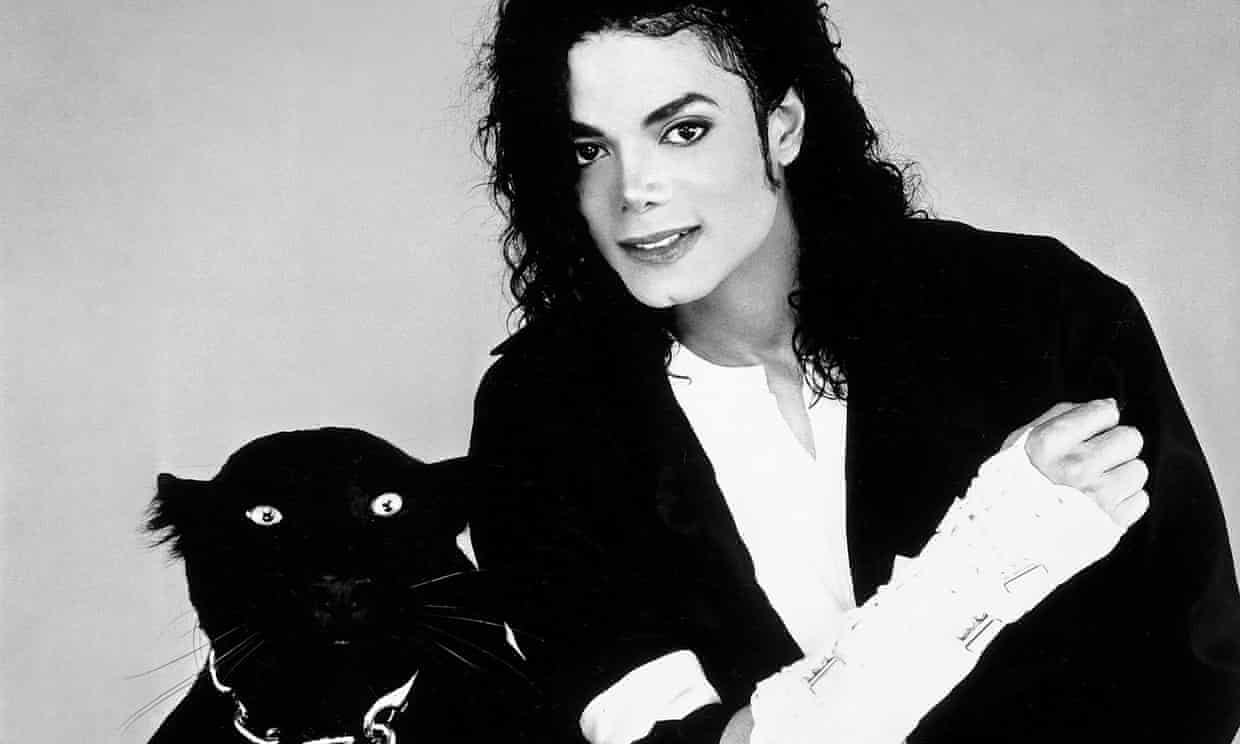
Yet amid the controversy (most in the media simply dismissed it as a “publicity stunt”), very few asked the simple question: what did it mean? Couched in between the Rodney King beating and the Los Angeles riots, it seems crazy in retrospect not to interpret the short film in that context. Racial tensions in the US, in LA in particular, were hot. In this climate, Michael Jackson – the world’s most famous black entertainer – made a short film in which he escapes the confines of the Hollywood sound stage, transforms into a black panther and channels the pent-up rage and indignation of a nation and moment. Jackson himself later explained that in the coda he wanted “to do a dance number where I [could] let out my frustration about injustice and prejudice and racism and bigotry, and within the dance I became upset and let go.”
The Black or White short film was no anomaly in its racial messaging. The Dangerous album, from its songs to its short films, not only highlights black talent, styles and sounds, but also acts as a kind of tribute to black culture. Perhaps the most obvious example of this is the video for Remember the Time. Featuring some of the era’s most prominent black luminaries – Magic Johnson, Eddie Murphy and Iman – the video is set in ancient Egypt. In contrast to Hollywood’s stereotypical representations of African Americans as servants, Jackson presents them here as royalty.
Promised a sizable production budget, Jackson enlisted John Singleton, a young, rising black director coming off the success of Boyz N the Hood, for which he received an Oscar nomination. Jackson and Singleton’s collaboration resulted in one of the most lavish and memorable music videos of his career, highlighted by the intricate, hieroglyphic hip-hop dance sequence (choreographed by Fatima Robinson). Again, in this video, Jackson appeared whiter than ever, but the video – directed, choreographed by and featuring black talent – was a celebration of black history, art, and beauty.
The song, in fact, was produced and co-written by another young black rising star, Teddy Riley, the architect of new jack swing. Prior to Riley, Jackson had reached out to a range of other black artists and producers, including LA Reid, Babyface, Bryan Loren and LL Cool J, searching for someone with whom he could develop a new, post-Quincy Jones sound. He found what he was looking for in Riley, whose grooves contained the punch of hip-hop, the swing of jazz and the chords of the black church. Remember the Time is perhaps their best-known collaboration, with its warm organ bedrock and tight drum machine beat. It became a huge hit on black radio, and reached No 1 on Billboard’s R&B/hip-hop chart.
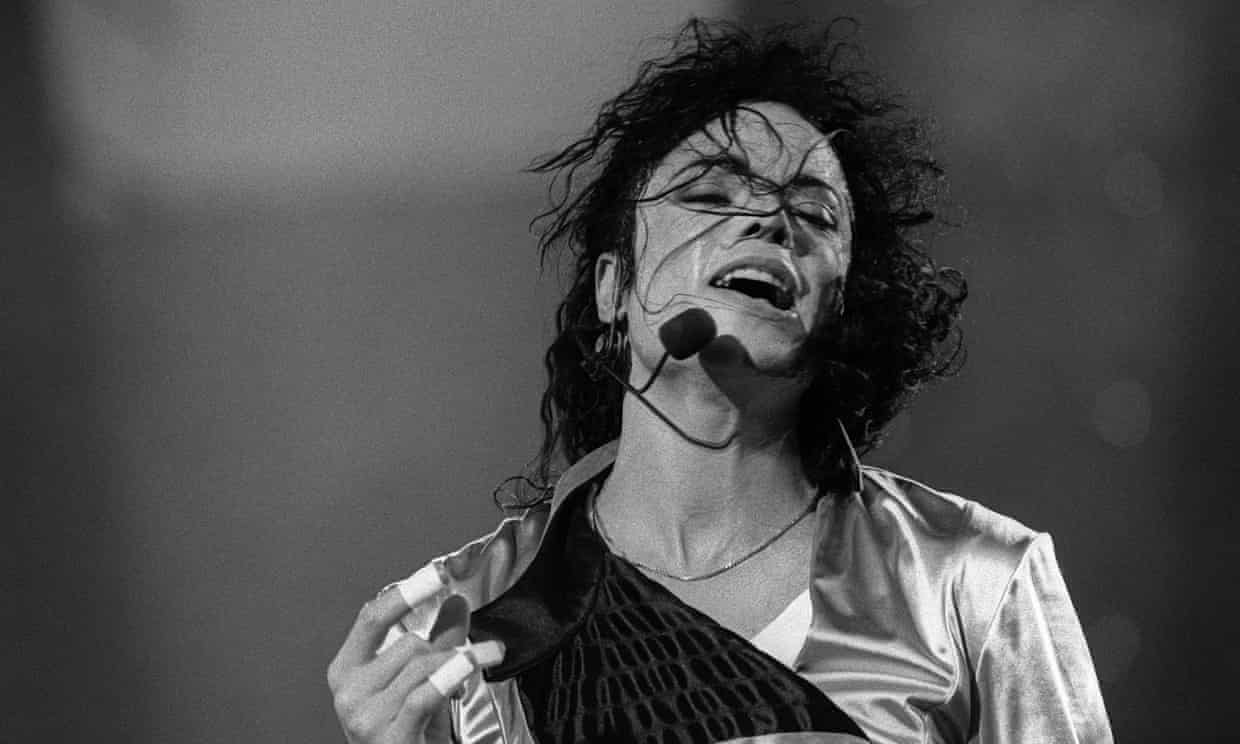
The first six tracks on Dangerous are Jackson-Riley collaborations. They sounded like nothing Jackson had done before, from the glass-shattering, horn-flavoured verve of Jam to the factory-forged, industrial funk of the title track. In place of Thriller’s pristine crossover R&B and Bad’s cinematic drama are a sound and message that are more raw, urgent and attuned to the streets. On She Drives Me Wild, the artist builds an entire song around street sounds: engines; horns; slamming doors and sirens. On several other songs Jackson integrated rap, one of the first pop artists – along with Prince – to do so.
Dangerous went on to become Jackson’s best-selling album after Thriller, shifting 7m copies in the US and more than 32m copies worldwide. Yet at the time, many viewed it as Jackson’s last desperate attempt to reclaim his throne. When Nirvana’s Nevermind replaced Dangerous at the top of the charts in the second week of January 1992, white rock critics gleefully declared the King of Pop’s reign over. It’s easy to see the symbolism of that moment. Yet Dangerous has aged well. Returning to it now, without the hype or biases that accompanied its release in the early 90s, one gets a clearer sense of its significance. Like Nevermind, it surveyed the cultural scene – and the internal anguish of its creator – in compelling ways. Moreover, it could be argued that Dangerous was just as significant to the transformation of black music (R&B/new jack swing) as Nevermind was to white music (alternative/grunge). The contemporary music scene is certainly far more indebted to Dangerous ( ie Finesse, the recent new jack-inflected single from Bruno Mars and Cardi B).
Only recently, however, have critics begun to reassess the significance of Dangerous. In a 2009 Guardian article, it is referred to as Jackson’s “true career high.” In her book on the album for Bloomsbury’s 33 ⅓ series, Susan Fast describes Dangerous as the artist’s “coming of age album”. The record, she writes, “offers Jackson on a threshold, finally inhabiting adulthood – isn’t this what so many said was missing? – and doing so through an immersion in black music that would only continue to deepen in his later work.”
That immersion continued as well in his visual work, which, in addition to Black or White and Remember the Time, showcased the elegant athleticism of basketball superstar Michael Jordan in the music video for Jam and the palpable sensuality of Naomi Campbell in the sepia-coloured short film for In the Closet. A few years later, he worked with Spike Lee on the most pointed racial salvo of his career, They Don’t Care About Us, which has been resurrected as an anthem for the Black Lives Matter movement. Still, critics, comedians and the public alike continued to suggest Jackson was ashamed of his race. “Only in America,” went a common joke, “can a poor black boy grow up to be a rich white woman.”
Yet Jackson demonstrated that race is about more than mere pigmentation or physical features. While his skin became whiter, his work in the 1990s was never more infused with black pride, talent, inspiration and culture.
A must read - superb article
Black and White: how Dangerous kicked off Michael Jackson's race paradox
As the King of Pop’s skin got lighter his music became more politicised, and 1991’s overlooked album encapsulated this radical moment in music
For a figure as enigmatic as Michael Jackson, one of the more fascinating paradoxes about his career is this: as he became whiter, he became blacker. Or to put it another way: as his skin became whiter, his work became blacker.
To elaborate, we must rewind to a crucial turning point: the early 1990s. In hindsight, it represents the best of times and the worst of times for the artist. In November 1991, Jackson released the first single from his Dangerous album: Black or White, a bright, catchy pop-rock-rap fusion that soared to No 1 on the Billboard Hot 100 and remained at the top of the charts for six weeks. It was his most successful solo single since Beat It.
The conversation surrounding Jackson at this point, however, was not about his music. It was about his race. Sure, critics said, he might sing that it “don’t matter if you’re black or white”, but then why had he turned himself white? Was he bleaching his skin? Was he ashamed of his blackness? Was he trying to appeal to every demographic, transcend every identity category in a vainglorious effort to reach greater commercial heights than Thriller?
To this day, many assume Jackson bleached his skin to become white – that it was a wilful cosmetic decision because he was ashamed of his race. Yet in the mid-1980s Jackson was diagnosed with vitiligo, a skin disorder that causes loss of pigmentation in patches on the body. According to those close to him, it was an excruciatingly humiliating personal challenge, one in which he went to great lengths to hide through long-sleeve shirts, hats, gloves, sunglasses and masks. When Jackson died in 2009, his autopsy definitively confirmed he had vitiligo, as did his medical history.
However, in the early 1990s, the public were sceptical to say the least. Jackson first publicly revealed he had vitiligo in a widely watched 1993 interview with Oprah Winfrey. “This is the situation,” he explained. “I have a skin disorder that destroys the pigmentation of the skin. It is something I cannot help, OK? But when people make up stories that I don’t want to be what I am it hurts me … It’s a problem for me that I can’t control.” Jackson did acknowledge having plastic surgery but said he was “horrified” that people concluded that he didn’t want to be black. “I am a black American,” he declared. “I am proud of my race. I am proud of who I am.”
For Jackson, then, there was no ambivalence about his racial identity and heritage. His skin had changed but his race had not. In fact, if anything his identification as a black artist had grown stronger. The first indication of this came in the video for Black or White. Watched by an unprecedented global audience of 500 million viewers, it was Jackson’s biggest platform ever; a platform, it should be noted, that he earned by breaking down racial barriers at MTV with his groundbreaking short films from Thriller.
The first few minutes of the Black or White video seemed relatively benign and consistent with the utopian calls of previous songs (Can You Feel It, We Are the World, Man in the Mirror). Jackson, adorned in contrasting black-and-white apparel, travels across the globe, fluidly adapting his dance moves to whatever culture or country he finds himself in. He acts as a kind of cosmopolitan shaman, performing alongside Africans, Native Americans, Thais, Indians and Russians, attempting, it seems, to instruct the recliner-bound White American Father (played by George Wendt) about the beauties of difference and diversity. The main portion of the video culminates with the groundbreaking “morphing sequence,” in which ebullient faces of various races seamlessly blend from one to another. The message seemed to be that we are all part of the human family – distinct but connected – regardless of cosmetic variations.
In the age of Trump and the resurgence of white nationalism, even that multicultural message remains vital. But that’s not all Jackson had to say. Just when the director (John Landis) yells “Cut!” we see a black panther lurking off the soundstage to a back alley. The coda that follows became Jackson’s riskiest artistic move to this point in his career – particularly given the expectations of his “family-friendly” audience. In contrast to the upbeat, mostly optimistic tone of the main portion of the video, Jackson unleashes a flurry of unbridled rage, pain and aggression. He bashes a car in with a crowbar; he grabs and rubs himself; he grunts and screams; he throws a trash can into a storefront (echoing the controversial climax of Spike Lee’s 1989 film, Do the Right Thing), before falling to his knees and tearing off his shirt. The video ends with Homer Simpson, another White American Father, taking the remote from his son, Bart, and turning off the TV. That censorious move proved prescient.
The so-called “panther dance” caused an uproar; more so, ironically, than anything put out that year by Nirvana or Guns N’ Roses. Fox, the US station that originally aired the video, was bombarded with complaints. In a front page story, Entertainment Weekly described it as “Michael Jackson’s Video Nightmare”. Eventually, relenting to pressure, Fox and MTV excised the final four minutes of the video.
Yet amid the controversy (most in the media simply dismissed it as a “publicity stunt”), very few asked the simple question: what did it mean? Couched in between the Rodney King beating and the Los Angeles riots, it seems crazy in retrospect not to interpret the short film in that context. Racial tensions in the US, in LA in particular, were hot. In this climate, Michael Jackson – the world’s most famous black entertainer – made a short film in which he escapes the confines of the Hollywood sound stage, transforms into a black panther and channels the pent-up rage and indignation of a nation and moment. Jackson himself later explained that in the coda he wanted “to do a dance number where I [could] let out my frustration about injustice and prejudice and racism and bigotry, and within the dance I became upset and let go.”
The Black or White short film was no anomaly in its racial messaging. The Dangerous album, from its songs to its short films, not only highlights black talent, styles and sounds, but also acts as a kind of tribute to black culture. Perhaps the most obvious example of this is the video for Remember the Time. Featuring some of the era’s most prominent black luminaries – Magic Johnson, Eddie Murphy and Iman – the video is set in ancient Egypt. In contrast to Hollywood’s stereotypical representations of African Americans as servants, Jackson presents them here as royalty.
Promised a sizable production budget, Jackson enlisted John Singleton, a young, rising black director coming off the success of Boyz N the Hood, for which he received an Oscar nomination. Jackson and Singleton’s collaboration resulted in one of the most lavish and memorable music videos of his career, highlighted by the intricate, hieroglyphic hip-hop dance sequence (choreographed by Fatima Robinson). Again, in this video, Jackson appeared whiter than ever, but the video – directed, choreographed by and featuring black talent – was a celebration of black history, art, and beauty.
The song, in fact, was produced and co-written by another young black rising star, Teddy Riley, the architect of new jack swing. Prior to Riley, Jackson had reached out to a range of other black artists and producers, including LA Reid, Babyface, Bryan Loren and LL Cool J, searching for someone with whom he could develop a new, post-Quincy Jones sound. He found what he was looking for in Riley, whose grooves contained the punch of hip-hop, the swing of jazz and the chords of the black church. Remember the Time is perhaps their best-known collaboration, with its warm organ bedrock and tight drum machine beat. It became a huge hit on black radio, and reached No 1 on Billboard’s R&B/hip-hop chart.
The first six tracks on Dangerous are Jackson-Riley collaborations. They sounded like nothing Jackson had done before, from the glass-shattering, horn-flavoured verve of Jam to the factory-forged, industrial funk of the title track. In place of Thriller’s pristine crossover R&B and Bad’s cinematic drama are a sound and message that are more raw, urgent and attuned to the streets. On She Drives Me Wild, the artist builds an entire song around street sounds: engines; horns; slamming doors and sirens. On several other songs Jackson integrated rap, one of the first pop artists – along with Prince – to do so.
Dangerous went on to become Jackson’s best-selling album after Thriller, shifting 7m copies in the US and more than 32m copies worldwide. Yet at the time, many viewed it as Jackson’s last desperate attempt to reclaim his throne. When Nirvana’s Nevermind replaced Dangerous at the top of the charts in the second week of January 1992, white rock critics gleefully declared the King of Pop’s reign over. It’s easy to see the symbolism of that moment. Yet Dangerous has aged well. Returning to it now, without the hype or biases that accompanied its release in the early 90s, one gets a clearer sense of its significance. Like Nevermind, it surveyed the cultural scene – and the internal anguish of its creator – in compelling ways. Moreover, it could be argued that Dangerous was just as significant to the transformation of black music (R&B/new jack swing) as Nevermind was to white music (alternative/grunge). The contemporary music scene is certainly far more indebted to Dangerous ( ie Finesse, the recent new jack-inflected single from Bruno Mars and Cardi B).
Only recently, however, have critics begun to reassess the significance of Dangerous. In a 2009 Guardian article, it is referred to as Jackson’s “true career high.” In her book on the album for Bloomsbury’s 33 ⅓ series, Susan Fast describes Dangerous as the artist’s “coming of age album”. The record, she writes, “offers Jackson on a threshold, finally inhabiting adulthood – isn’t this what so many said was missing? – and doing so through an immersion in black music that would only continue to deepen in his later work.”
That immersion continued as well in his visual work, which, in addition to Black or White and Remember the Time, showcased the elegant athleticism of basketball superstar Michael Jordan in the music video for Jam and the palpable sensuality of Naomi Campbell in the sepia-coloured short film for In the Closet. A few years later, he worked with Spike Lee on the most pointed racial salvo of his career, They Don’t Care About Us, which has been resurrected as an anthem for the Black Lives Matter movement. Still, critics, comedians and the public alike continued to suggest Jackson was ashamed of his race. “Only in America,” went a common joke, “can a poor black boy grow up to be a rich white woman.”
Yet Jackson demonstrated that race is about more than mere pigmentation or physical features. While his skin became whiter, his work in the 1990s was never more infused with black pride, talent, inspiration and culture.
A must read - superb article
-
soulmum
- Utente certificato
- Messaggi: 9304
- Iscritto il: 31 maggio 2016, 12:43
-
soulmum
- Utente certificato
- Messaggi: 9304
- Iscritto il: 31 maggio 2016, 12:43

-
soulmum
- Utente certificato
- Messaggi: 9304
- Iscritto il: 31 maggio 2016, 12:43